What is STEM Education for Kids? Complete Guide
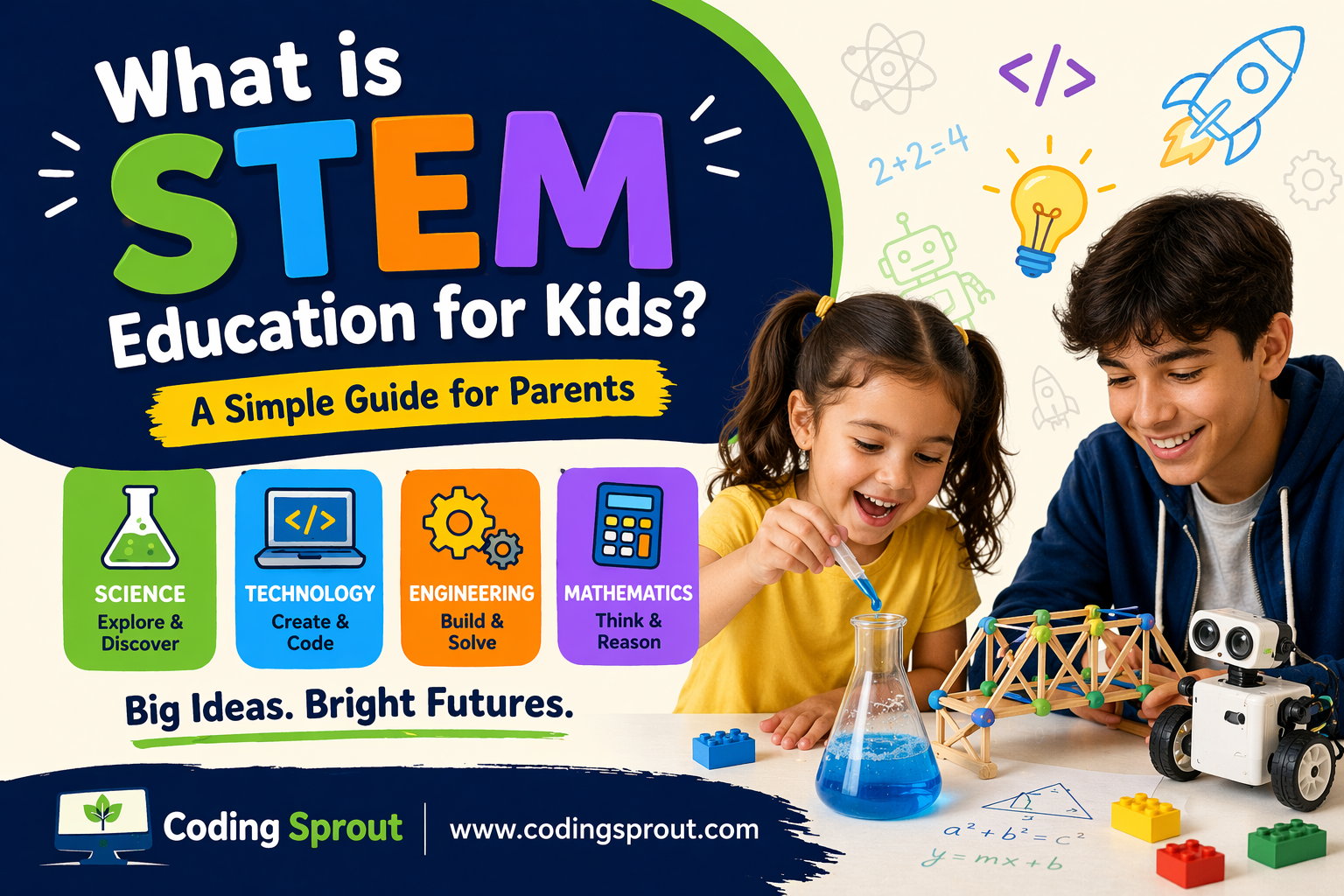
🧠 What is STEM Education for Kids? A Complete Guide for Parents
You’ve probably heard the term STEM education everywhere—from schools to summer camps to coding programs.
But what does it actually mean?
And more importantly, why is STEM education important for kids?
In this guide, we’ll break it all down in a simple, parent-friendly way so you can understand:
What STEM education is
Why it matters
How it benefits your child
How to get started
🔬 What Does STEM Stand For?
STEM stands for:
Science
Technology
Engineering
Mathematics
These four areas work together to help kids understand how the world works and how to solve problems.
👉 Instead of learning subjects separately, STEM combines them into real-world learning experiences.
👶 What is STEM Education for Kids?
STEM education for kids is a way of teaching that focuses on:
Hands-on learning
Problem-solving
Critical thinking
Creativity
Rather than memorizing facts, kids learn by:
Building
Experimenting
Creating
👉 For example:
Instead of just learning math, a child might use math to build a simple game or design a structure.
🎯 Why STEM Education is Important for Kids
STEM education is more than just academics—it prepares kids for the future.
🧠 1. Builds Problem-Solving Skills
STEM teaches kids how to:
Ask questions
Test ideas
Find solutions
These skills are useful in school—and in life.
💡 2. Encourages Creativity
Many people think STEM is just technical—but it’s actually very creative.
Kids can:
Design projects
Build inventions
Create games
🚀 3. Prepares Kids for Future Careers
Many of the fastest-growing careers are in STEM fields, including:
Software development
Engineering
Data science
👉 Starting early gives kids a strong advantage.
📚 4. Improves Academic Performance
STEM learning supports:
Math skills
Reading comprehension
Logical thinking
💪 5. Builds Confidence
When kids solve problems and complete projects, they feel accomplished and motivated.
🧩 Examples of STEM Activities for Kids
STEM learning doesn’t have to be complicated.
Here are simple examples:
🔬 Science Activities
Simple experiments (like mixing baking soda and vinegar)
Exploring nature
💻 Technology Activities
Coding games
Learning how apps work
🏗 Engineering Activities
Building with LEGO
Creating simple structures
➗ Math Activities
Puzzle games
Counting and patterns
👉 Many activities combine multiple STEM areas at once.
🎮 How Coding Fits into STEM Education
Coding is one of the most powerful parts of STEM.
When kids learn coding, they use:
Technology to build programs
Math for logic
Engineering to structure solutions
Creativity to design projects
👉 That’s why coding classes for kids are a popular way to introduce STEM learning.
🏫 STEM Education in Schools vs At Home
🏫 In Schools
Schools introduce STEM through:
Science classes
Math lessons
STEM programs
However, time and resources can be limited.
🏠 At Home
Parents can support STEM learning through:
Activities
Apps
Coding programs
👉 Combining both is the best approach.
🌐 STEM Programs and Classes for Kids
Many parents choose structured programs to help their kids learn STEM skills.
These include:
Coding classes
Robotics programs
STEM camps
Benefits of STEM programs:
Guided learning
Hands-on projects
Expert instruction
👶 When Should Kids Start STEM Education?
The good news is:
👉 Kids can start STEM learning as early as age 4 or 5.
At younger ages, STEM focuses on:
Play-based learning
Exploration
Curiosity
As kids grow, they can move into:
Coding
Robotics
Advanced problem-solving
⚠️ Common Misconceptions About STEM
❌ “STEM is only for smart kids”
STEM is for all kids—it’s about learning how to think, not being perfect.
❌ “STEM is just math and science”
STEM includes creativity, design, and problem-solving.
❌ “It’s too hard for young kids”
With the right approach, STEM can be fun and simple—even for beginners.
🚀 How to Get Started with STEM Education at Home
Step 1: Encourage Curiosity
Let your child ask questions and explore.
Step 2: Use Simple Tools
Start with:
Building toys
Coding apps
STEM kits
Step 3: Make Learning Fun
Use games, projects, and hands-on activities.
Step 4: Try a STEM Program
Structured programs can help kids stay engaged and progress faster.
🎯 Benefits of STEM Education in the Long Run
Kids who engage in STEM learning often develop:
Strong problem-solving skills
Confidence in learning
Creativity and innovation
Interest in technology
👉 These skills are valuable in any career—not just tech.
🌱 Final Thoughts: What is STEM Education for Kids?
So, what is STEM education?
👉 It’s a way of helping kids:
Think critically
Solve problems
Create and innovate
STEM is not just about preparing kids for jobs—it’s about helping them understand the world and their place in it.
📣 Ready to Get Your Child Started?
Coding Sprout offers fun, beginner-friendly coding classes for kids that introduce STEM concepts through hands-on learning and real projects.
👉 Give your child a strong foundation in STEM today.
Ready to Get Started?
Enroll your child in one of our coding classes and watch them grow into confident coders!
Browse Classes